
Проходил из любопытства. Лектор на мой взгляд специфический, но тема в целом нормально раскрыта и курс лучше сделан в плане тестов чем первая часть. Если тема для вас актуальна, то в целом пройти можно.
 Курс на Stepik
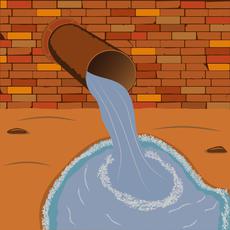
The program is aimed at acquaintance with the indicators of wastewater and its ways of biological treatment.
| Показатель | Текущие показатели | Рост | |||
|---|---|---|---|---|---|
| Значение | 🏆 Рейтинг | 3 дн | 7 дн | 30 дн | |
 Учеников на курсе Учеников на курсе |
6 612 | ||||
 Сертификатов выдано Сертификатов выдано |
769 | ||||
 Отзывов получено Отзывов получено |
28 | ||||
 Рейтинг курса Рейтинг курса |
4.821 | ||||
 Количество уроков Количество уроков |
39 | ||||
 Количество квизов Количество квизов |
82 | ||||
 Время прохождения курса Время прохождения курса |
— | ||||
 Обновления курса Обновления курса |
— | — | |||
 Дата публикации курса Дата публикации курса |
— | — | — | — | |
| Последнее обновление |
— | — | — | — | |
Проходил из любопытства. Лектор на мой взгляд специфический, но тема в целом нормально раскрыта и курс лучше сделан в плане тестов чем первая часть. Если тема для вас актуальна, то в целом пройти можно.

1. What I have learned in this course? What was new to me? I learned a lot about the detailed operation of biological wastewater treatment plants. What was new to me was the depth of specific parameters, like: • The importance of Solid Retention Time (SRT) for controlling microbial growth. • The different types of aeration systems, like step feed and extended aeration, and why you would use one over the other. • The specific conditions for different biological processes, like the optimal pH of 6.8-7.2 for phosphorus removal and anoxic conditions for denitrification. • The details of advanced systems like EGSB and MBBR reactors. 2. What did I like? I liked the practical, "real-world" feel of the questions. They weren't just about theory; they were about the actual numbers and choices an operator would make, like: • The typical range for MLSS (1,000-4,000 mg/L). • The correct dissolved oxygen level (1-3 mg/L). • Identifying the next tank in the process after the aeration tank (the Clarifier). This made the information feel very useful. 3. Were there any weak points? How can this course get better? Yes, there was a main weak point: the multiple-choice options were sometimes unclear. • Some questions had more than one possible correct answer, but I could only choose one. • Other times, the "correct" answer in the list was technically wrong, which was frustrating. How it can get better: The course would be much better if the answer choices were reviewed to make sure there is only one clear, technically correct answer for each question. This would make learning easier and less confusing. 4. What requirements did i have for a course and why did you choose this one? My requirement was to learn the key practical concepts of wastewater treatment quickly and directly, without long, complicated lessons. I "chose" this one (our conversation) because it used a question-and-answer format. This is a very effective way to learn. It tests your knowledge immediately, shows you what you don't know, and helps you remember the right information. It felt like a focused quiz that got straight to the point.

This course is a very Good source of Knowledge as i learnt a lot from this course.

The Moving Bed Biofilm Reactor (MBBR) is an advanced biological wastewater treatment technology that combines activated sludge and biofilm principles. It uses plastic carrier media (e.g., polyethylene or polypropylene) suspended in aerated or anoxic tanks to support microbial growth. I chose this course for the following reasons: Familiarity with treatment technologies: Including physical, chemical, and biological treatment methods. Knowledge of wastewater characteristics: Understanding pollutant types, concentrations, and flow rates Regulatory awareness: Familiarity with local and national wastewater treatment regulations and standards.

This was a wholesome course

This course is really essential to researchers and anyone who wants to seek for the knowledge in water treatment and bioengineering. It has really levelled my knowledge from known to unknown and I must say that is how learning should be and I am much appreciative of. The technologies and approaches used offers great solutions to address global challenges in water.